
Common Food Allergens: The 9 Major Allergens and How an AI Recipe Generator Helps You Cook Around Them
If you’re cooking for someone with a food allergy, a smart AI recipe generator can swap out risky ingredients and suggest safe substitutes in seconds — but knowing the common food allergens yourself is what actually keeps the kitchen safe. The U.S. Food and Drug Administration (FDA) recognizes nine major food allergens that cause about 90% of all food allergic reactions. Here’s the exact list, why sesame joined it in 2023, and how AI can — and can’t — help you cook around them.
An AI recipe generator does not guarantee a recipe is allergen-free. If you or someone you cook for has a food allergy, always read the full ingredient label yourself, watch for cross-contact, and follow the guidance of your doctor or allergist. A severe food allergy is a medical condition — treat it like one.
The 9 Major Food Allergens Recognized by the FDA
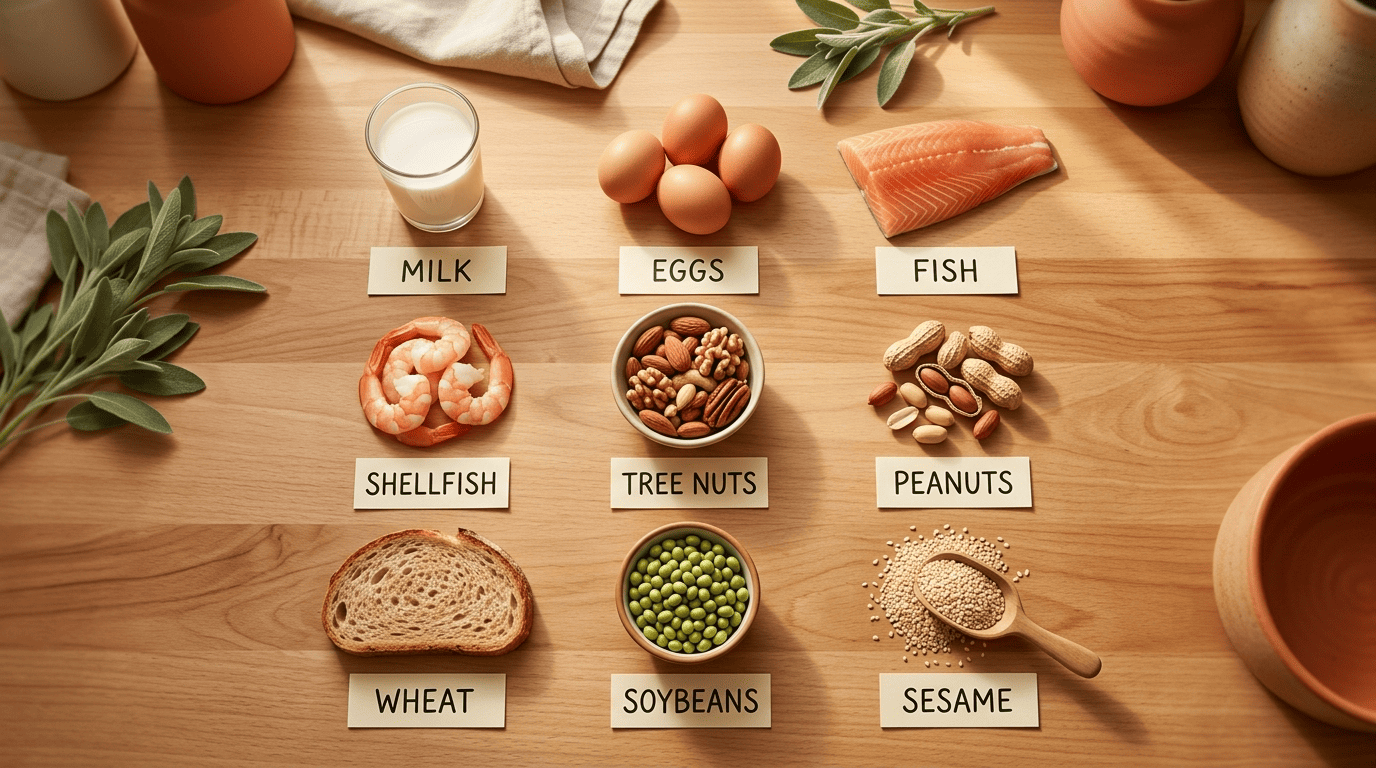
The FDA maintains an exact, legally defined list of major food allergens, and it’s worth knowing by heart if you cook for anyone with a food allergy. In order, the nine major food allergens are:
- Milk — dairy from cows, including butter, cheese, and yogurt
- Eggs — whole eggs, egg whites, and egg-based products like mayonnaise
- Fish — finfish such as cod, bass, and salmon
- Crustacean shellfish — shrimp, crab, and lobster (mollusks like oysters and clams are not classified as “major” in the U.S.)
- Tree nuts — almonds, walnuts, cashews, and pecans, among others
- Peanuts — a legume, not a true tree nut, but one of the most common triggers
- Wheat — found in bread, pasta, and most baked goods
- Soybeans — soy milk, tofu, edamame, and many processed foods
- Sesame — seeds, oil, tahini, and hidden uses in spice blends
The FDA states the list plainly:
The major food allergens are milk, eggs, fish, Crustacean shellfish, tree nuts, peanuts, wheat, soybeans, and sesame.
U.S. Food and Drug Administration
These nine common food allergens account for roughly 90% of all food allergic reactions in the United States, which is exactly why federal law singles them out for mandatory labeling.
Why these nine — and what “major allergen” means
“Major food allergen” is a legal category the FDA uses to decide what must be disclosed on a label — it isn’t a claim that these are the only foods capable of triggering a reaction. In theory, a person can develop an allergic reaction to almost any food, from strawberries to sunflower seeds. But these nine common food allergens cover about 90% of documented cases, which is why regulators focused labeling requirements on them rather than trying to police every possible trigger.
The scale of the problem is bigger than most people assume. According to the American College of Allergy, Asthma and Immunology (ACAAI), roughly 6% of adults and children in the U.S. live with a food allergy, and the nonprofit FARE estimates the number at around 33 million Americans. That’s not a niche concern — it’s a routine part of everyday meal planning for millions of households.
Sesame: The 9th Major Allergen (FASTER Act, 2021)
The list of major food allergens hasn’t always had nine entries — sesame is the newest addition, and the story of how it got there says a lot about how allergen law actually works.
The Food Allergen Labeling and Consumer Protection Act (FALCPA), passed in 2004, established the first eight major food allergens: milk, eggs, fish, Crustacean shellfish, tree nuts, peanuts, wheat, and soybeans. For nearly two decades, sesame sat outside that legal framework even though allergists increasingly flagged it as a common trigger.
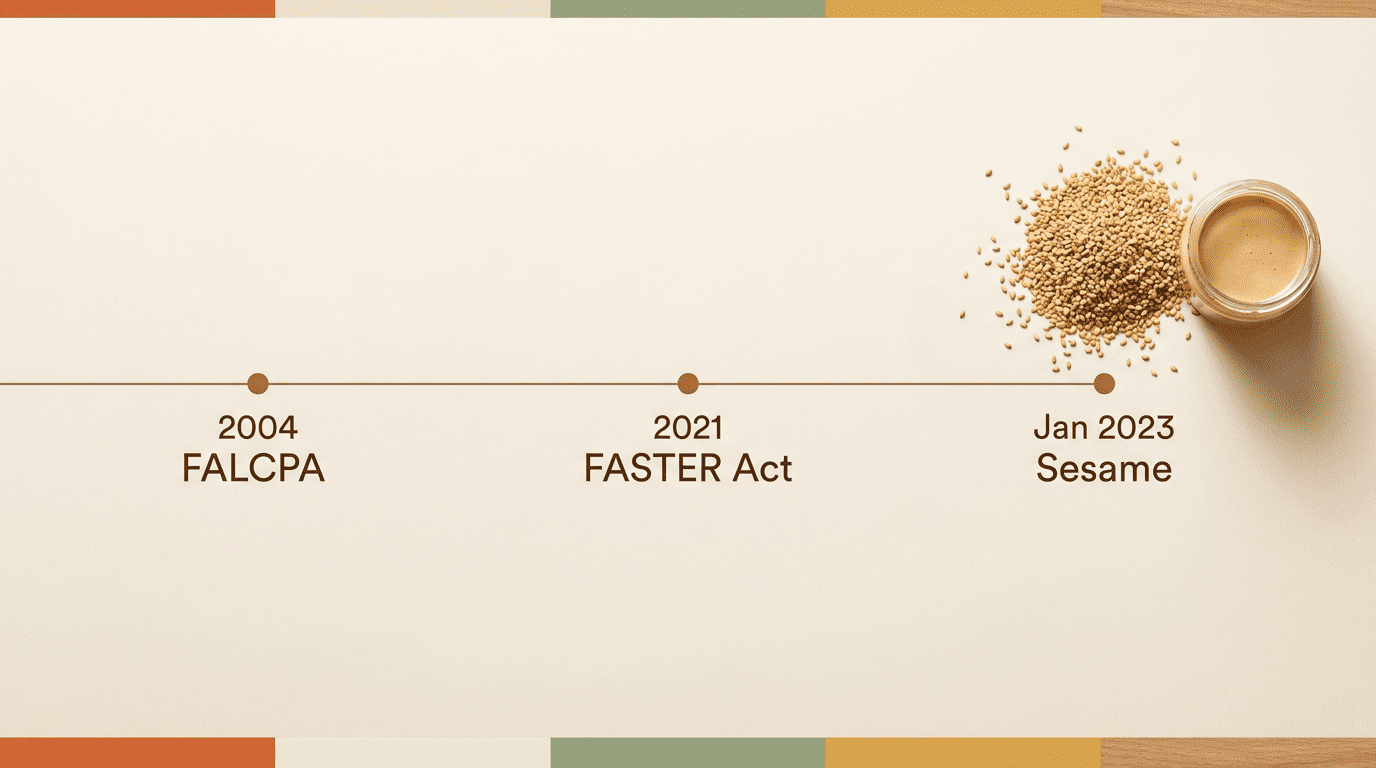
That changed with the FASTER Act, signed on April 23, 2021, which declared sesame the ninth major food allergen. The labeling requirement itself didn’t take effect immediately — manufacturers had until January 1, 2023, to comply. Before that date, sesame could legally hide inside vague ingredient terms like “spices” or “natural flavors,” making it nearly impossible for allergic consumers to spot on a label. Since 2023, any packaged food sold in the U.S. must name sesame explicitly if it’s present.
How an AI Recipe Generator Helps You Avoid Allergens
Set the allergen as a hard constraint. Tell the generator “no dairy,” “peanut-free,” or “gluten-free,” and it filters out recipes containing that ingredient before it ever suggests them — no manual scanning of ingredient lists required.
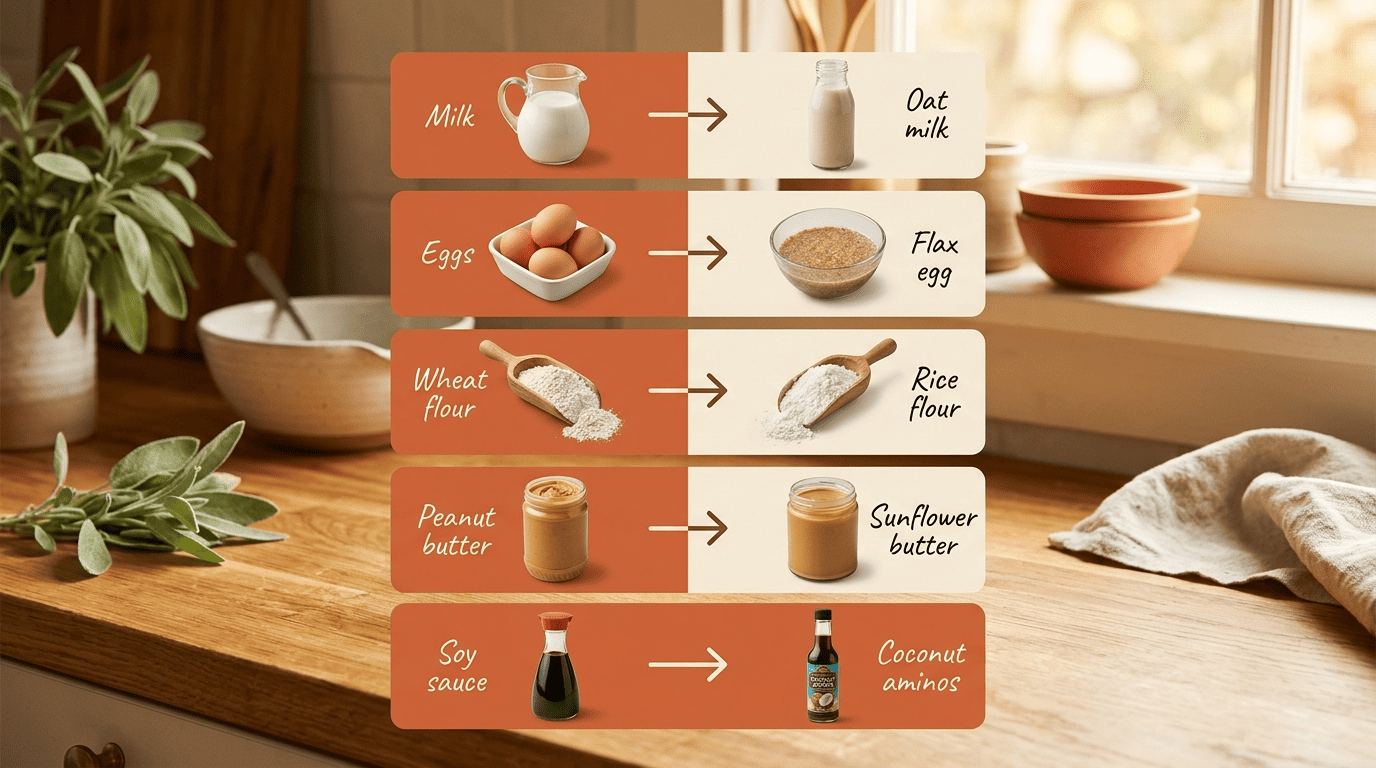
Get safe substitution suggestions. A well-built AI recipe generator free to try can propose swaps like oat or soy milk for dairy (assuming no soy allergy), flax egg or applesauce for eggs, and almond or rice flour for wheat. That last example is a useful warning on its own: almond flour is a tree nut product, so a “wheat-free” swap can accidentally introduce a different major allergen.
Rewrite an existing recipe on the fly. Instead of hunting for a brand-new allergen-safe recipe from scratch, you can feed the tool a recipe you already like and ask it to adapt the ingredient list around your restriction. If you want to try AI recipe generator features like this yourself, the practical value comes from combining them with your own label-reading habits, not replacing them.
A few common allergen swaps worth knowing before you accept any AI suggestion:
- Milk → oat milk, soy milk, or coconut milk (check for a soy allergy first)
- Eggs → flax egg (1 tbsp ground flax + 3 tbsp water) or unsweetened applesauce
- Wheat flour → rice flour or oat flour (almond flour is a tree nut, not allergy-neutral)
- Peanut butter → sunflower seed butter (watch for sesame cross-contact in shared facilities)
- Soy sauce → coconut aminos
Smart substitutions still need a human check
An AI recipe generator knows the typical substitution patterns, but it has no idea what’s actually sitting in your pantry or which brand you buy. It can’t see that your “dairy-free” margarine was processed on shared equipment with milk, or that your almond flour brand also packages peanuts. Always cross-check every suggested substitution against your own known allergens before you cook.
The Risk AI Can’t See: Cross-Contact
Cross-contact is different from the bacterial contamination people usually mean when they say “cross-contamination” — it’s the unintentional transfer of an allergen protein from one food to another, typically through shared cutting boards, utensils, fryer oil, or a toaster. Even trace amounts, invisible to the eye, can be enough to trigger a reaction in someone with a severe allergy.

This is a blind spot no recipe generator can fix, because it has no visibility into your kitchen. It doesn’t know you used the same knife for peanut butter and jelly, and it can’t read the “processed in a facility that also handles tree nuts” disclaimer printed on your ingredient’s packaging. According to background on the topic collected in Wikipedia’s overview of food allergy, cross-reactivity is a related but distinct phenomenon — for example, the protein tropomyosin found in shrimp can trigger reactions to other crustaceans and even some mollusks because the immune system recognizes similar protein structures across species.
Some allergens also hide behind ingredient names that don’t obviously say “milk” or “wheat,” which is another reason label literacy matters more than any app:
| Allergen | Names it can hide behind on a label |
|---|---|
| Milk | Casein, whey, lactalbumin, ghee |
| Wheat | Semolina, spelt, farina, durum |
| Soy | Edamame, tofu, textured vegetable protein, lecithin |
| Sesame | Tahini, benne, gomashio, sesamol |
In practice, reducing cross-contact risk means:
- Use separate cutting boards and utensils for allergen-free dishes
- Wash hands and countertops thoroughly between handling different ingredients
- Read “may contain” and “processed in a facility” warnings on every package
- Avoid shared fryer oil or toasters when cooking for someone with a severe allergy
- Store allergen-free ingredients separately from common allergens in your pantry
Reading the Label Is Non-Negotiable
Federal law requires that food labels disclose the source of every major allergen present, either directly in the ingredient list or through a separate “Contains:” statement — for example, “Contains: Wheat, Milk, Soy.” The rule goes further than just naming the allergen category: the label must also specify the exact type of tree nut (almond, pecan, walnut) and the specific species of fish or crustacean (cod, bass, shrimp, crab), according to guidance published on FoodSafety.gov.
This is precisely where an AI recipe generator hits its limits. The tool works with general ingredient names — “flour,” “milk,” “nuts” — while the actual allergen risk lives in a specific brand, a specific production line, and a specific package sitting in your kitchen. The label is the only source that reflects what’s really inside that exact product.
Here’s how the label, the AI tool, and your doctor divide the work:
| Source of information | What it tells you | What it can’t tell you |
|---|---|---|
| AI recipe generator | Which ingredients to avoid or swap based on your stated restriction | What’s actually in your specific brand or package |
| Food label “Contains:” statement | The exact source of each major allergen in that product | Whether a recipe idea suits your dietary needs |
| Doctor or allergist | Diagnosis, severity, and a personalized action plan | Day-to-day ingredient choices at the grocery store |
Treat an AI-generated recipe as the starting point for a meal, and the label as the final checkpoint before anything goes in the pot.
Symptoms, Anaphylaxis, and When to Call a Doctor
Typical allergic reaction symptoms — hives, swelling, vomiting, and trouble breathing — usually appear within two hours of exposure, though some reactions are delayed by four to six hours. Anaphylaxis is the severe, life-threatening form of an allergic reaction, and according to the American College of Allergy, Asthma and Immunology, food allergy is a leading cause of anaphylaxis treated outside of hospital settings in the United States.
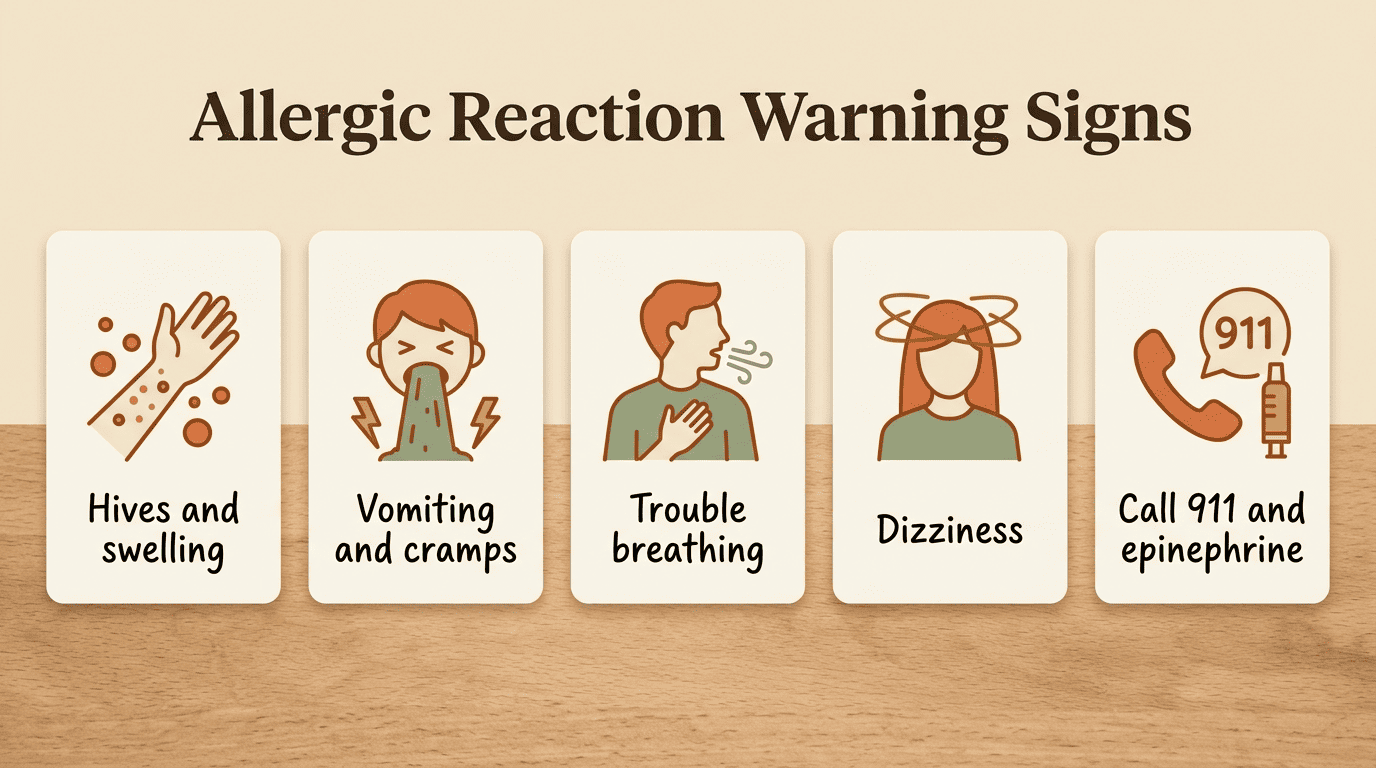
Epinephrine is the first-line treatment for anaphylaxis, and anyone with a known severe food allergy should have an auto-injector on hand and know how to use it. If anaphylaxis occurs, the correct response is immediate epinephrine and a call to 911 — not waiting to see if symptoms pass on their own.
Watch for these warning signs after eating a suspected allergen:
- Hives, itching, or swelling of the lips, face, or throat
- Vomiting, stomach cramps, or diarrhea
- Trouble breathing, wheezing, or a tight throat
- Dizziness, a rapid pulse, or a sudden drop in blood pressure
- Any combination of the above appearing quickly after a meal — treat it as an emergency
Diagnosing a food allergy and building a safety plan is a job for a doctor or allergist, not an AI recipe generator. The tool can help you plan meals around a restriction you already know about, but it cannot diagnose, treat, or replace medical guidance.