
AI Vegan Recipe Generator: Turn Any Craving (or Empty Fridge) Into a Plant-Based Dinner
Going vegan shouldn’t mean staring at the same three dinners on repeat. An AI recipe generator can take whatever is in your fridge — or just a craving — and turn it into a fully plant-based meal in about 30 seconds.
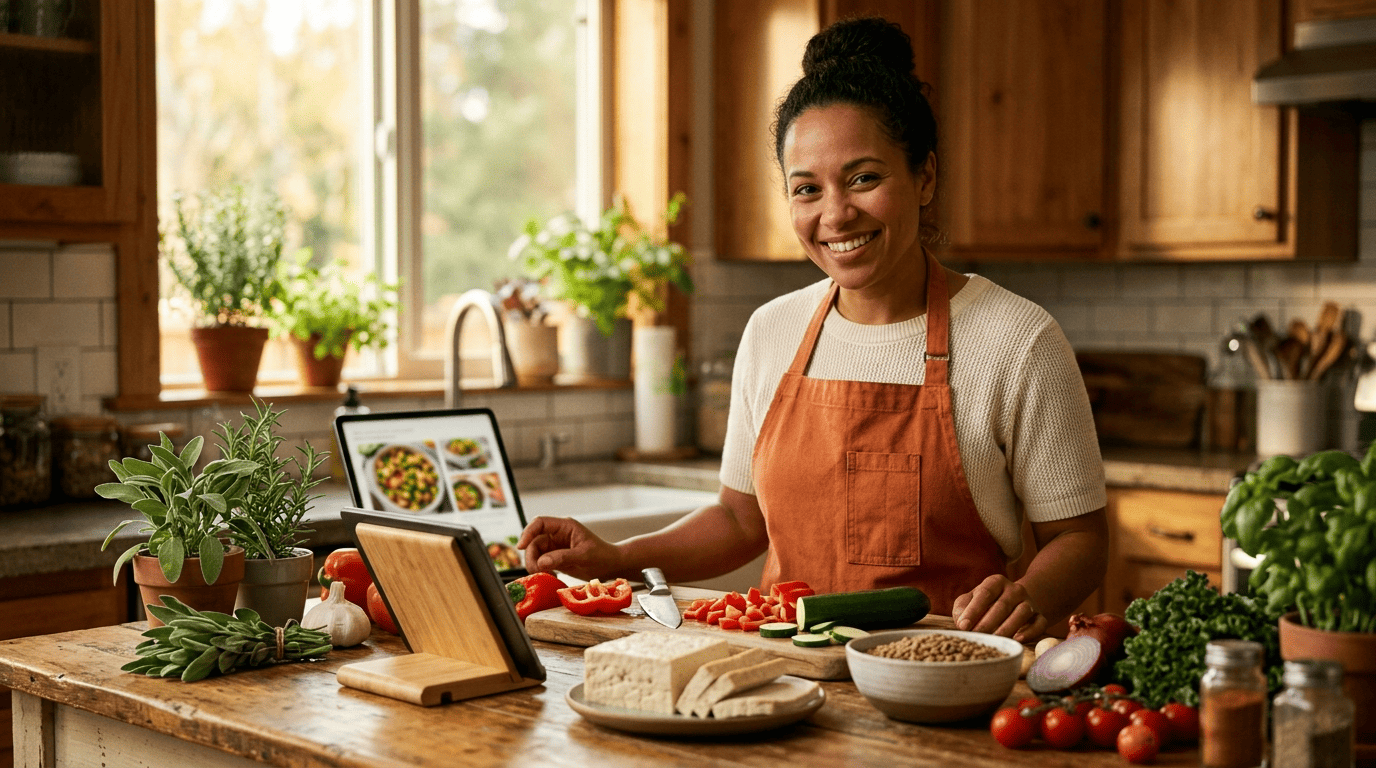
A vegan AI recipe generator does one thing the old recipe-box never could: it swaps out every animal ingredient for you and keeps the protein and flavor intact, a distinction the Wikipedia entry on veganism is worth a skim for if you’re new to what actually counts as “not vegan.” Here’s how it works, what it reaches for, and how to eat well while you’re at it.
Can an AI Really Make Vegan Recipes? (Yes — Here’s How)
A vegan recipe generator doesn’t just filter out meat at the last step — it treats “vegan” as a hard constraint built into the prompt from the start, which is exactly why a good plant-based recipe generator catches the ingredients people forget about, like whey, gelatin, honey, or fish sauce hiding in a sauce recipe.
What “vegan” means to the AI
Veganism rules out more than meat: dairy, eggs, honey, and gelatin are all off the table, along with sneakier animal-derived ingredients like whey, casein, fish sauce, and even some wines fined with isinglass. A good generator treats the diet as a hard restriction baked into the prompt rather than a filter applied after the fact — that’s the difference between a recipe that’s “mostly vegan” and one that actually is. If you want the full picture of what the diet excludes and why, the Wikipedia entry on veganism lays out the definition clearly.
From craving or fridge to recipe in ~30 seconds
There are usually two ways in. The first is “what can I make with what I have” — you list the ingredients sitting in your fridge and pantry, and the AI-powered vegan recipe generator builds around them. The second is a craving prompt, something like “spicy lentil tacos” or “something creamy and comforting.” Either way, you can layer on parameters: cuisine, spice level, cook time, and number of servings. Some tools go further and accept a photo of a dish, a photo of your pantry shelf, or even a link to a cooking video, and reverse-engineer a plant-based version. The output lands in front of you — ingredients, steps, and swap notes — in roughly 20 to 30 seconds.
Those who abstain from eating animal-based foods can eat a variety of protein-containing plant foods each day in order to get all the amino acids needed to make new protein.
Harvard T.H. Chan School of Public Health, The Nutrition Source
How the AI Swaps Out Animal Products
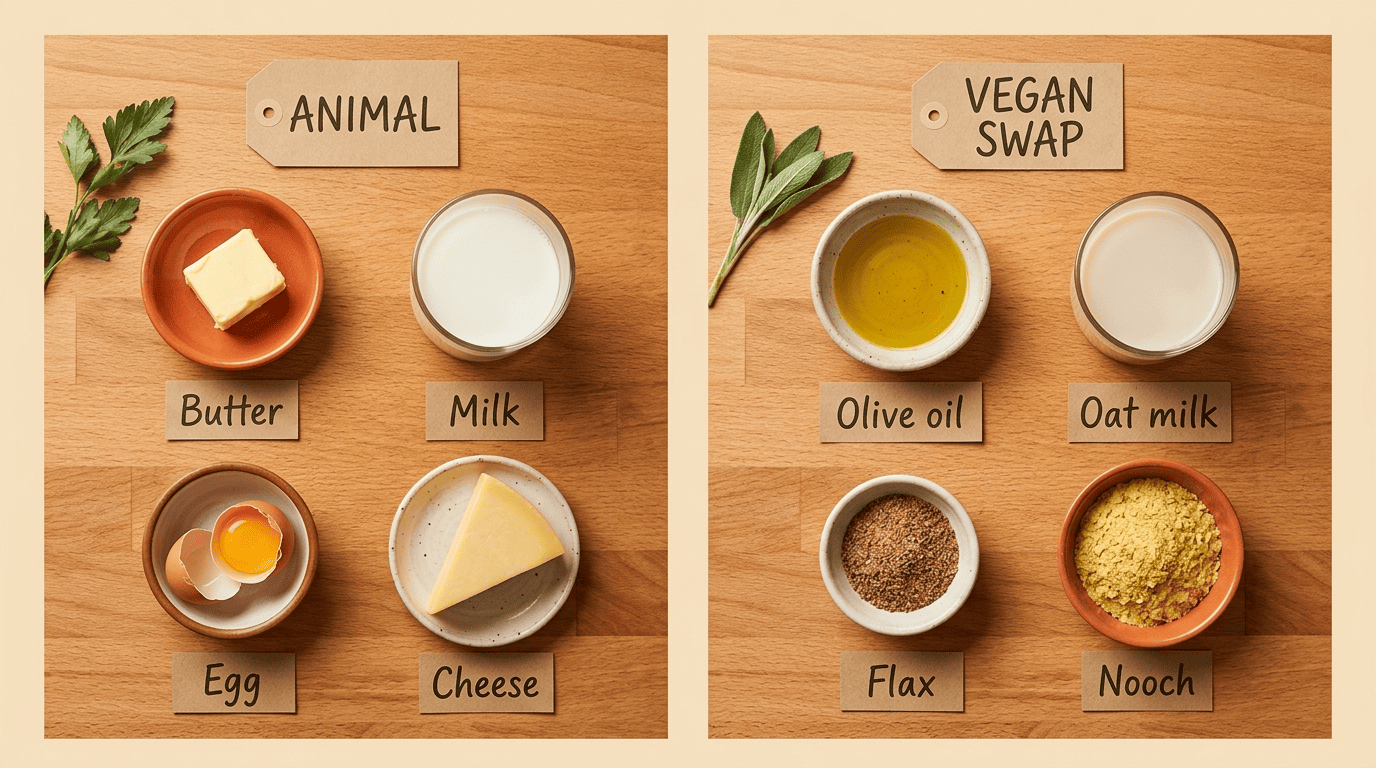
Every substitution a vegan AI recipe generator makes follows the same logic: replace the ingredient, not just remove it, so the dish still behaves the way it’s supposed to.
The swap cheat-sheet
This is essentially what a plant-based recipe generator does automatically every time it rewrites a recipe:
| Animal ingredient | Vegan swap | Why it works |
|---|---|---|
| Butter | Olive oil or vegan butter | Similar fat content for cooking and baking |
| Milk | Soy, oat, or almond milk | Matches liquid volume and richness |
| Heavy cream | Cashew cream or oat cream | Blended nuts mimic the fat and body |
| Egg (baking) | Flax egg (1 tbsp ground flax + 3 tbsp water) | Gels and binds like egg does |
| Egg white / meringue | Aquafaba (chickpea brine) | Whips into stiff peaks just like egg white |
| Parmesan | Nutritional yeast | Delivers a similar savory, cheesy note |
| Ground meat | Lentils, tofu crumble, or Beyond Meat | Holds texture in tacos, bolognese, chili |
| Honey | Maple syrup | Same sweetness and pourable texture |
| Gelatin | Agar-agar | Sets liquids the same way, plant-derived |
Why the AI usually nails texture, not just “removes” things
Swapping an ingredient well means matching its job in the dish — fat content, binding power, or umami — not just deleting it and hoping the recipe still works. Nutritional yeast, for instance, brings a cheesy umami note that plain removal of parmesan never would. Aquafaba whips up almost exactly like egg white because its dissolved proteins and saponins act as surfactants, trapping and stabilizing air bubbles the same way egg-white proteins do. Cashew cream adds body to a sauce the way heavy cream does, just without the dairy. A generator worth using will explain the reasoning behind each swap right in the recipe notes, so you understand why it reached for that ingredient and not another.
Where the Protein Comes From
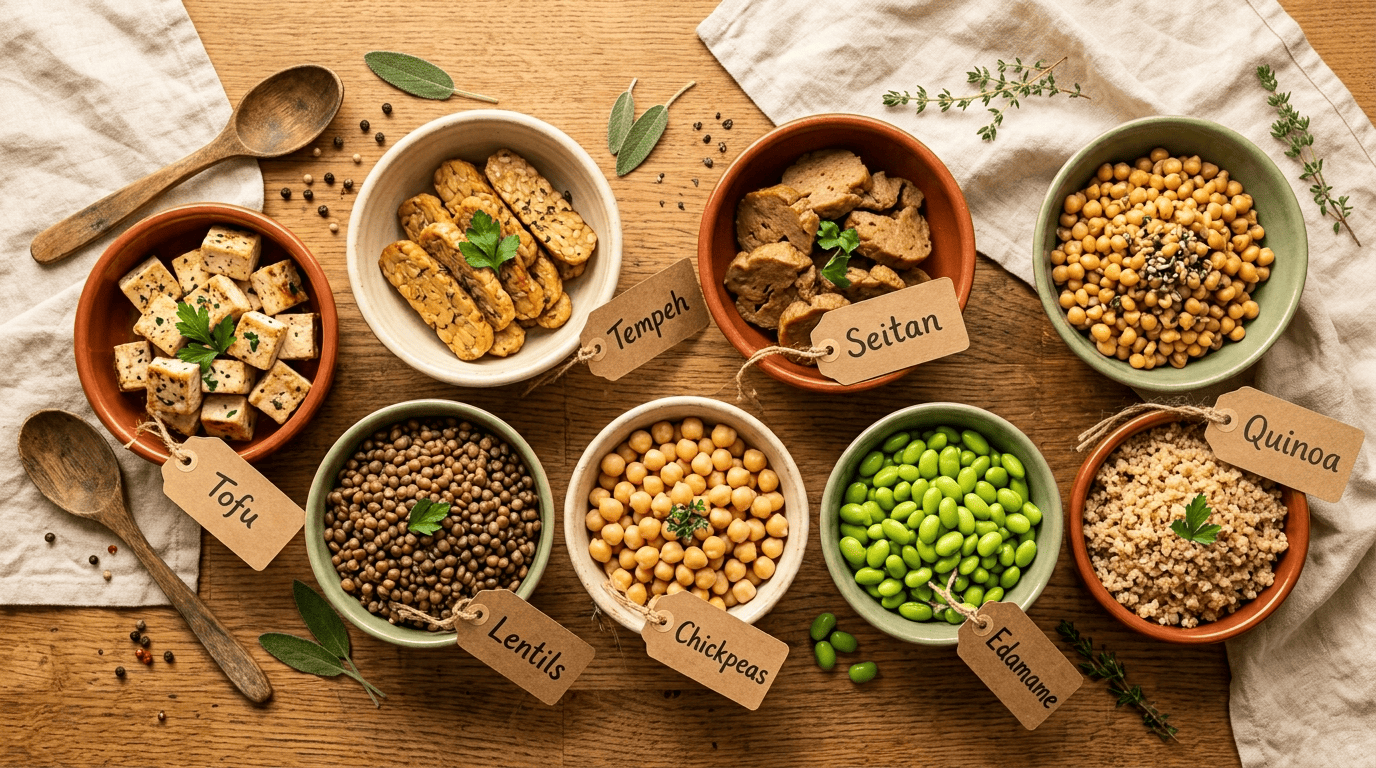
Tofu, tempeh, seitan, lentils, and chickpeas do most of the heavy lifting once dairy and meat are off the table.
The vegan protein all-stars
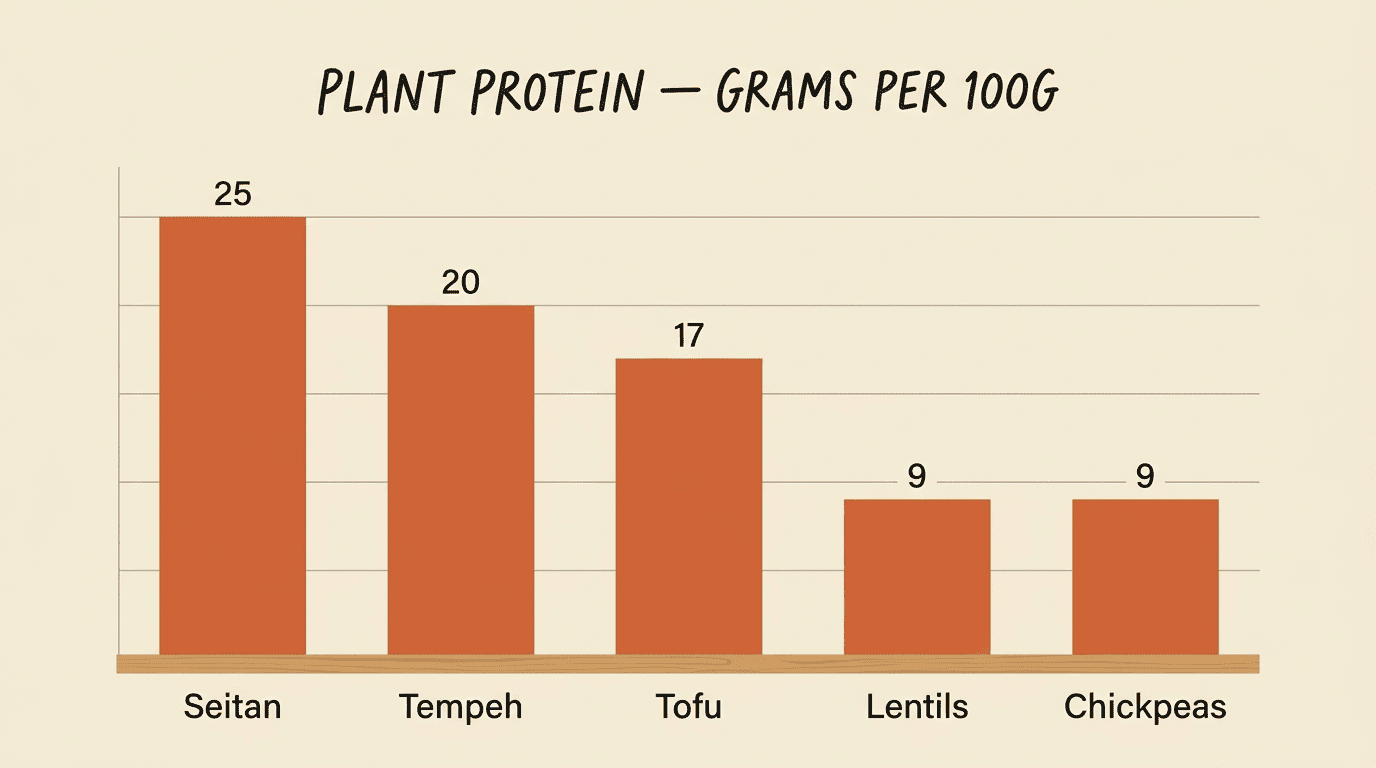
- Tofu — roughly 6-17g of protein per 100g depending on firmness (silken runs lowest, extra-firm highest), and it takes on whatever flavor it’s cooked in
- Tempeh — denser and fermented, closer to 20g per 100g
- Seitan — made from wheat gluten, one of the highest-protein plant options available
- Lentils and chickpeas — cheap, versatile, and the backbone of curries, tacos, and stews
- Black beans, edamame, and quinoa — quinoa in particular is a complete protein on its own
- Nuts and seeds — smaller amounts, but useful for topping and texture
An AI recipe generator pulls straight from this list whenever you ask for a “high-protein” plant-based meal. According to USDA MyPlate, beans, peas, lentils, and soy products like tofu all count toward the protein foods group, right alongside meat and fish.
Do you need to “combine proteins”?
The old advice about pairing rice and beans at the exact same meal to form a “complete” protein has mostly fallen out of favor. As the Harvard T.H. Chan School’s Nutrition Source puts it, eating a variety of plant proteins across the day is enough to cover all the essential amino acids — you don’t need rice and beans on the same plate. Classic combinations like hummus and pita or rice and lentils are still delicious and convenient, they’re just no longer considered a strict requirement.
What a high-protein vegan plate looks like
Ask a vegan AI recipe generator for a high-protein dinner and you’ll typically land somewhere around 25-35g of protein per serving. Dishes like mapo tofu, tofu stir-fry, lentil bolognese, and chickpea curry commonly land in the 18-26g range per serving, depending on portion size and how much tofu or legumes go in. If a recipe comes back light on protein, most tools will offer to bulk it up with extra tofu, tempeh, or a scoop of lentils.
A Gentle Nutrition Note: B12, Iron & Protein
A well-planned vegan diet can absolutely meet your nutrition needs — there’s just one nutrient worth actively tracking, and two that are easier than they sound.
The one nutrient to plan for: B12
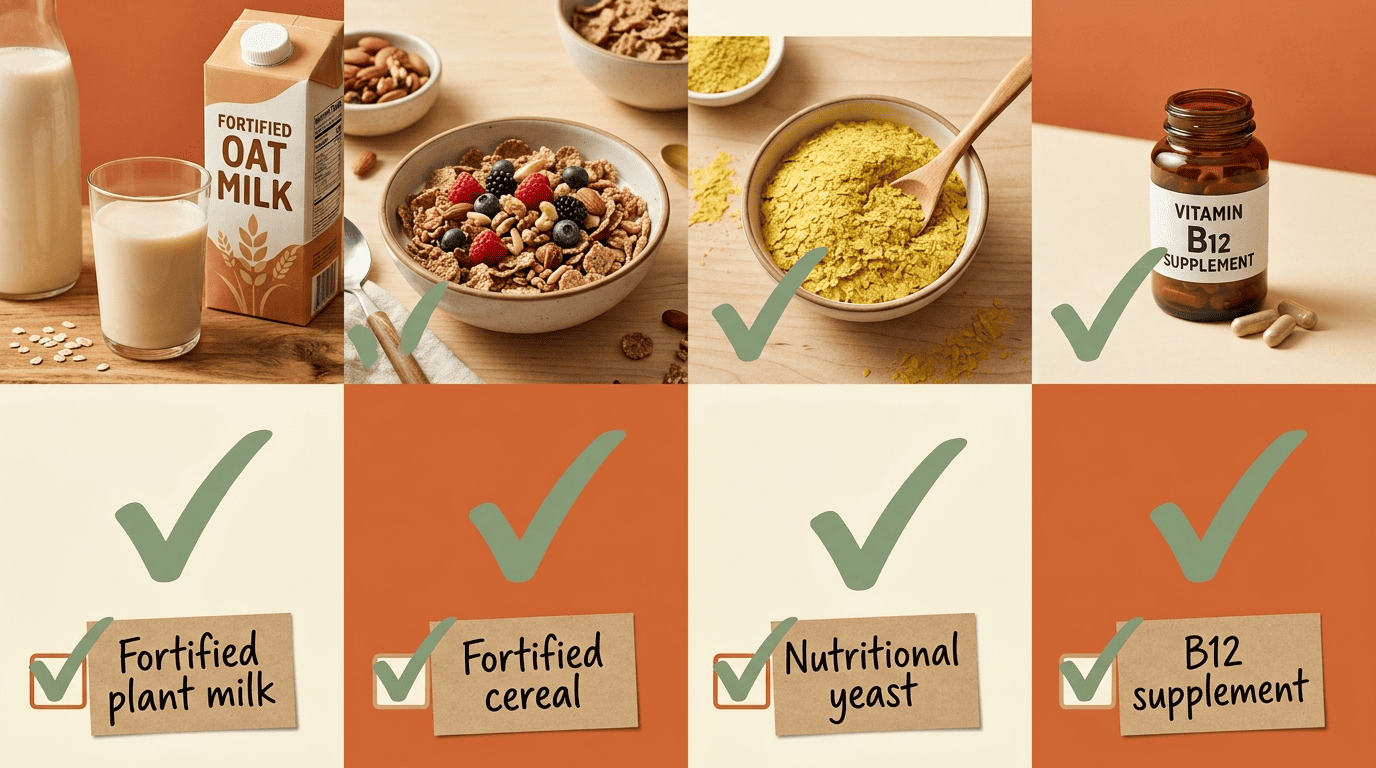
Vitamin B12 is close to absent in plant foods, which means most vegans need to get it from fortified products — fortified plant milk, breakfast cereals, some brands of nutritional yeast — or a supplement. According to the NIH Office of Dietary Supplements fact sheet on Vitamin B12, B12 is naturally found almost exclusively in animal foods, which is exactly why fortification and supplementation matter for a fully plant-based diet. A recipe generator can point you toward fortified ingredients, but it isn’t a substitute for a supplement if your diet needs one.
Iron and protein: easier than you think
Plant iron absorbs better with a little vitamin C alongside it. Spinach, lentils, tofu, and pumpkin seeds all carry iron, but the non-heme iron in plants isn’t absorbed as efficiently as the iron in meat — pairing it with bell peppers, tomatoes, or a squeeze of citrus helps your body take up more of it, and it’s an easy thing to ask an AI recipe generator to build in. Protein, meanwhile, tends to take care of itself once you’re eating a variety of sources across the week rather than relying on one.
This is friendly, general information, not a medical diet plan — if you’re pregnant, feeding a child, or managing a chronic condition, check in with a doctor or registered dietitian before making major dietary changes.
How to Tell the AI You’re Vegan (Prompting Tips)
The more specific the prompt, the fewer edits you’ll need afterward.
Build a prompt the AI can’t misread
- State it plainly: “strictly vegan — no dairy, eggs, honey, or gelatin”
- List any allergies or restrictions: soy-free, nut-free, gluten-free
- Set a protein target: “hit at least 25g protein per serving”
- Add cuisine, spice level, cook time, and number of servings
- List what’s already in your fridge or pantry
- Ask for swap notes explaining what replaced what and why
Double-check the sneaky stuff
Even a solid AI vegan recipe generator occasionally misses ingredients that don’t read as obviously animal-derived. A few classic culprits to watch for:
- Worcestershire sauce — usually contains anchovies
- Pesto — traditional recipes call for parmesan
- Canned refried beans — sometimes made with lard
- Red or white wine — some are fined with isinglass, a fish-derived clarifier
- Sugar — some brands are processed with bone char
A quick fix: add a line to your prompt asking it to “flag any ingredient that might not be vegan and suggest a swap.” One food-safety note worth remembering — if you’re cooking tempeh or dried legumes from scratch, make sure they’re brought to a full boil and cooked through before eating.
Real Vegan Dishes an AI Generator Will Hand You
From a fast weeknight stir-fry to a dessert nobody guesses is vegan, here’s the kind of range a good generator covers.
From weeknight to “who made this?”
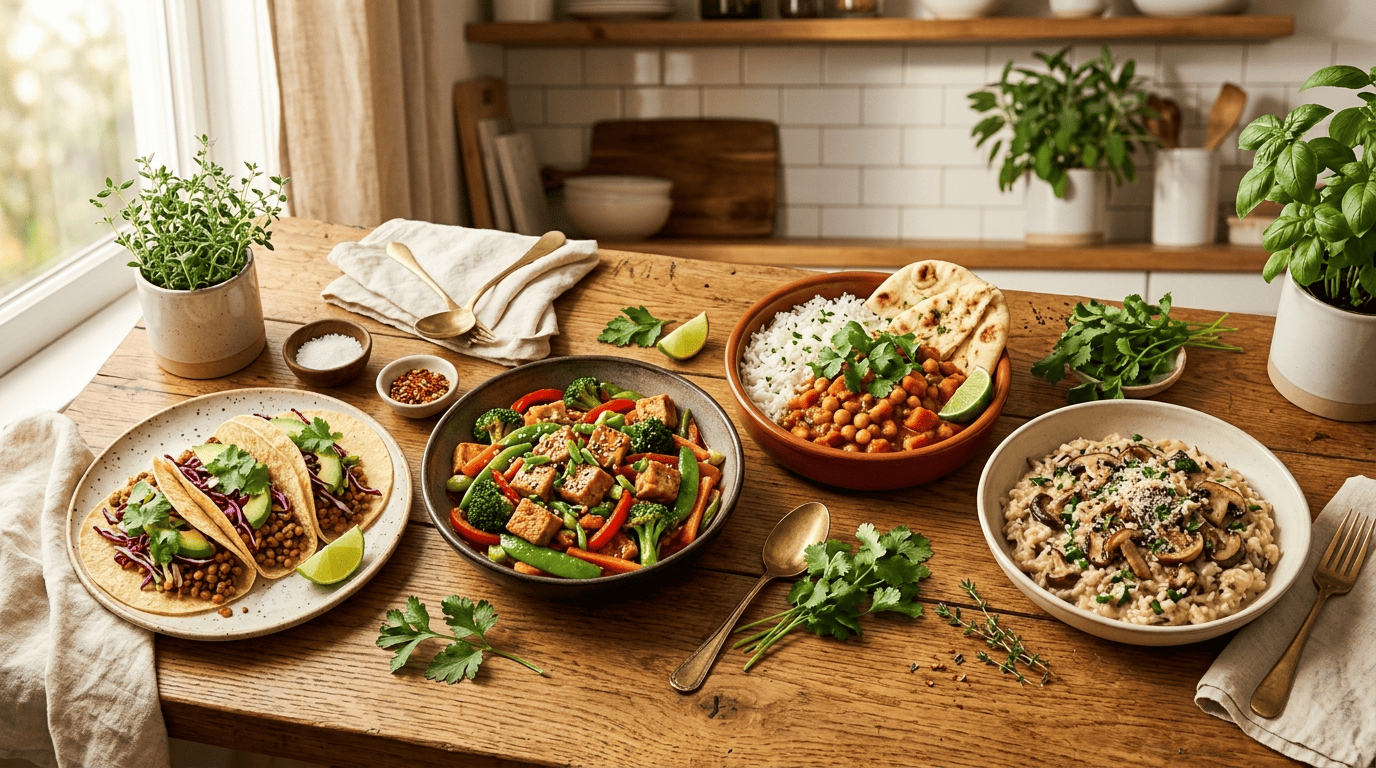
- Lentil tacos — protein from lentils, ready in under 30 minutes
- Tofu stir-fry — tofu as the protein base, endlessly customizable with whatever vegetables are on hand
- Chickpea curry — chickpeas carry both the protein and the texture
- Mushroom risotto — nutritional yeast stands in for the parmesan finish
- Vegan lasagna — cashew ricotta replaces the traditional cheese layer
- Mediterranean tofu bowl — tofu, grains, and vegetables built around bold, herby flavors
- Avocado chocolate mousse — whipped aquafaba or silken tofu gives it a rich, mousse-like texture
Free or Paid: What You Actually Get
Most people can get a solid vegan recipe out of a free tool with no account required — the paid tier is really about tracking and saving, not better recipes.
Basic recipe generation and guest mode cover most one-off “what should I cook tonight” moments without ever creating an account. The features that tend to sit behind a paid plan are the ones built for repeat use rather than a single dinner:
| Feature | Free / guest mode | Usually paid |
|---|---|---|
| Generate a vegan recipe | Yes | Yes |
| Save recipes to a cookbook | No | Yes |
| Weekly meal planning | No | Yes |
| Per-serving nutrition (protein, etc.) | Sometimes | Yes |
| Photo of the finished dish | No | Yes |
| Cross-device sync | No | Yes |
If you find yourself using an AI recipe maker regularly enough to want a running cookbook and weekly meal plans, that’s usually the point where upgrading starts to pay off.